
What Probate Covers in Forsyth County
Probate is the court process for settling a person's estate after death. It proves a will, names someone to manage the estate, pays debts, and passes property to heirs. In Forsyth County this work is done by the Estates Division of the Clerk of Superior Court. North Carolina has no separate probate court, so the clerk acts as the probate judge for routine estate matters. The county directory lists Estates, Foreclosure, and Guardianship divisions all under the clerk.
The reach is broad. Estates with a will and estates without one both run through the clerk. So do guardianship and incompetency cases, where a court appoints someone to act for an adult or child who cannot manage their own affairs. The Register of Deeds page backs up this split. It tells the public that Estates, Wills, Judgments, and related matters are located in the Forsyth County Clerk of Court Office, not the deeds office.
So the estate side and the land side stay separate. Deeds and recorded instruments go to the Register of Deeds. Wills, letters, inventories, and guardianship filings go to the clerk. People search these records for many reasons. Heirs check on a will. Buyers confirm who has the right to sell estate property. Creditors track a claim. Researchers and family members look up an old estate. Each of these starts with the clerk, since the clerk holds the file.
Probate Terms Defined
Estate files use words that trip up first-time readers. A short glossary helps before you open a case. These five terms show up in most Forsyth County probate records.
- Testator
- The person who made the will.
- Executor
- The person named in a will to settle the estate and carry out its terms.
- Intestate
- A person who died without a valid will; state law then sets who inherits.
- Guardianship
- A court arrangement where someone is appointed to make decisions for a person who cannot do so alone.
- Conservatorship
- A court arrangement focused on managing the money and property of a person who needs help with financial affairs.
How to Search Forsyth County Probate Records
Estate files are searchable through the statewide North Carolina eCourts Portal. The main tool is Smart Search, and Estates is a named advanced category in the official portal training. You can search by decedent name, estate name, or record number, then filter by Forsyth County. The portal shows the docket, but it is not the official record. For a certified copy of any estate document, ask the clerk.
- Open the eCourts Portal and choose Smart Search.
- Search by the decedent or estate name, or by record number if you have it.
- Open the advanced filters and set the case category to Estates and the location to Forsyth County.
- Review the case events, then request certified copies from the Estates Division of the Clerk of Superior Court for any official document.
The portal search-field options for an estate lookup are summarized below.
| Field | Type | Notes |
|---|---|---|
| Smart Search query | Text | Estate name, decedent name, or record number. |
| Advanced case category | Filter | Estates is a named advanced category in portal training. |
| Location | Filter | Set to Forsyth County. |
| Filing date range | Date | Useful for older estate files. |
| Case status | Filter | Open or closed estate status when shown. |
The Estates Office in Forsyth County
There is no probate court to visit. The Estates Division of the Clerk of Superior Court sits inside the Forsyth County Courthouse at 175 N. Chestnut Street. This is where you file a will, open an estate, get letters, and file inventories and accountings. The clerk's office also runs the Foreclosure and Guardianship divisions. The contact card below covers the main courthouse line and clerk hours.
Estates Division, Clerk of Superior Court
Forsyth County Courthouse
175 N. Chestnut Street
Winston-Salem, NC 27101
(336) 779-6300
Clerk hours: Mon-Fri 8:30 AM-5:00 PM
The official wills and estates help topic explains what probate involves and links the forms used statewide, from the wills and estates help page.
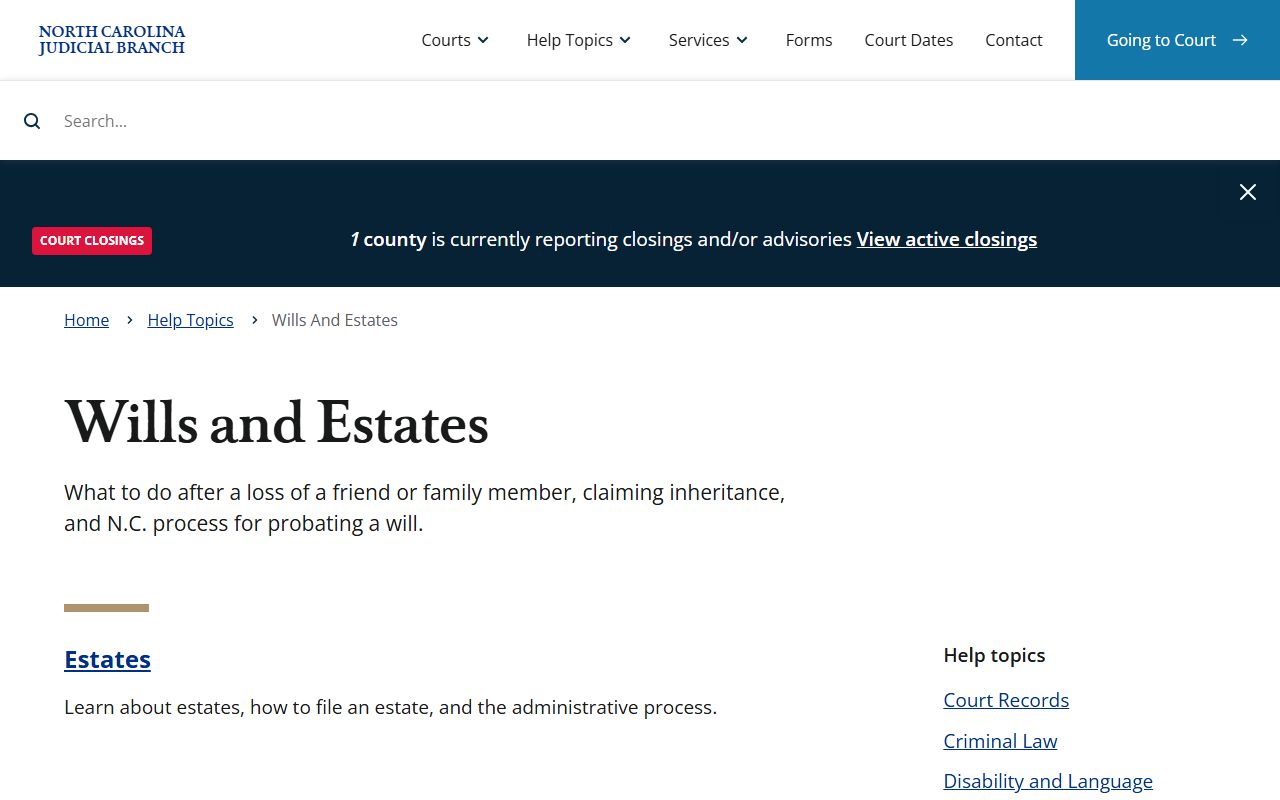
That help page is the best first stop before you open an estate in Forsyth County.
Probate Filing Fees in Forsyth County
Estate costs in North Carolina are set by the General Assembly through the statewide court cost chart, and the clerk collects them. Some estate costs are tied to the value of the estate, so a flat figure does not always apply. Confirm current amounts with the Estates Division before you file. The table below lists the common items.
| Item | Amount |
|---|---|
| Original probate application | Set by statewide court cost chart; confirm with the clerk |
| Letters testamentary or administration | Set by statewide court cost chart; confirm with the clerk |
| Certified copy | Set by statewide court cost chart; confirm with the clerk |
| Guardianship application | Set by statewide court cost chart; confirm with the clerk |
Note: estate administration fees may be charged on the value of the estate, so the clerk can give you an exact figure once a file is opened.
What Forsyth County Probate Records Show
An estate file builds up as the case moves. Early on it holds the will, any codicils, and the application for probate or letters. Then come the appointment of an executor or administrator, the letters that grant authority, and the estate inventory. Later filings cover creditor notices, claims, accountings, and the orders that approve distributions and close the estate. Death certificate details and the names of heirs and beneficiaries appear throughout. Each filing is dated, so the file reads as a timeline of the estate from open to close.
Some files reach beyond a basic estate. Guardianship and incompetency filings appear where a court must act for someone who cannot act alone. Special proceedings tied to estate property, such as partitions, may show up too. Heir and beneficiary information and death certificate details are common. A few of these record types are listed here.
- Original will and codicils.
- Application for probate or letters and the letters testamentary or of administration.
- Estate inventory and later accountings.
- Creditor notices, claims, and orders approving distributions.
- Guardianship or incompetency filings where they apply.
How Probate Works in Forsyth County
The estate process follows a set order through the clerk. It starts with a will or, when there is none, with an application to administer the estate. It ends after a final accounting and the clerk's approval to close. Between those points the personal representative gathers assets, pays valid claims, and passes what remains to the heirs. The steps below track the path used in Forsyth County.
- Find out whether there is a will and whether the person lived in Forsyth County or owned property that needs local administration.
- Contact the Estates Division of the Clerk of Superior Court at the courthouse.
- File the will and the required application or petition forms.
- Pay estate costs from the current statewide court cost chart.
- Get letters if you are appointed as personal representative.
- Give the required notice to heirs and creditors, then file the inventory and accountings by their deadlines.
- Resolve claims, taxes, and property sales, make distributions, and close the estate after the final accounting is approved.
Note: an executor or administrator has real legal duties and deadlines, so many people work with a lawyer even when the clerk handles the routine filings.
Restricted Probate Records
Most estate files are open under G.S. 7A-109, which keeps clerk records open during office hours unless the law says otherwise. But not everything in this area is public. Adoption is a special-proceeding category, yet adoption records are sealed and confidential under G.S. 48-9-102. So even though adoption sits among the clerk's special proceedings, the file is not open to the public.
Guardianship and incompetency cases can hold medical and mental health details. That information may be confidential or redacted under Chapter 122C, which keeps treatment information out of public records. The official guardianship help topic explains the process and the forms, from the guardianship help page.
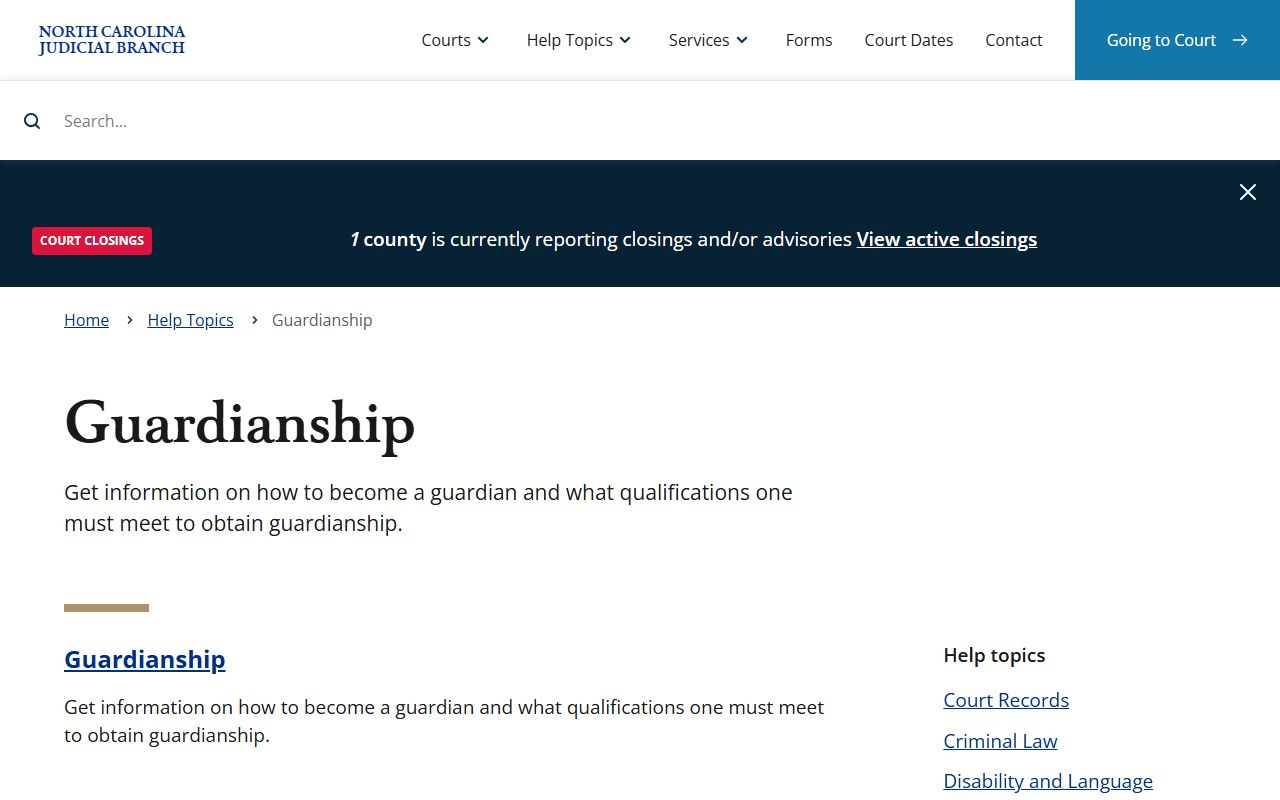
That help page is the place to start when a guardianship or incompetency case is involved.
The statute that seals adoption files is posted in full on the adoption records statute page.
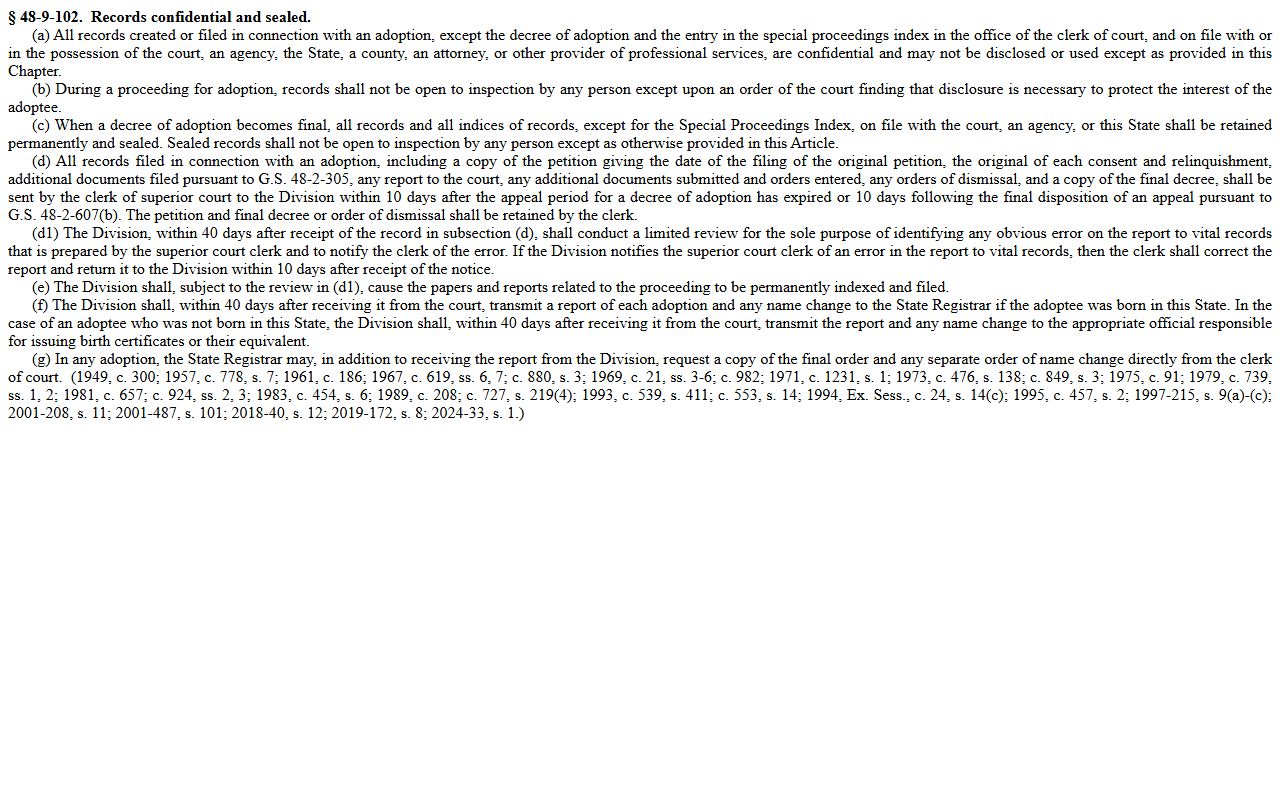
It confirms that adoption records stay sealed except for limited index treatment and court-authorized disclosures.
Mental health confidentiality is set out in the statute posted on the Chapter 122C page.
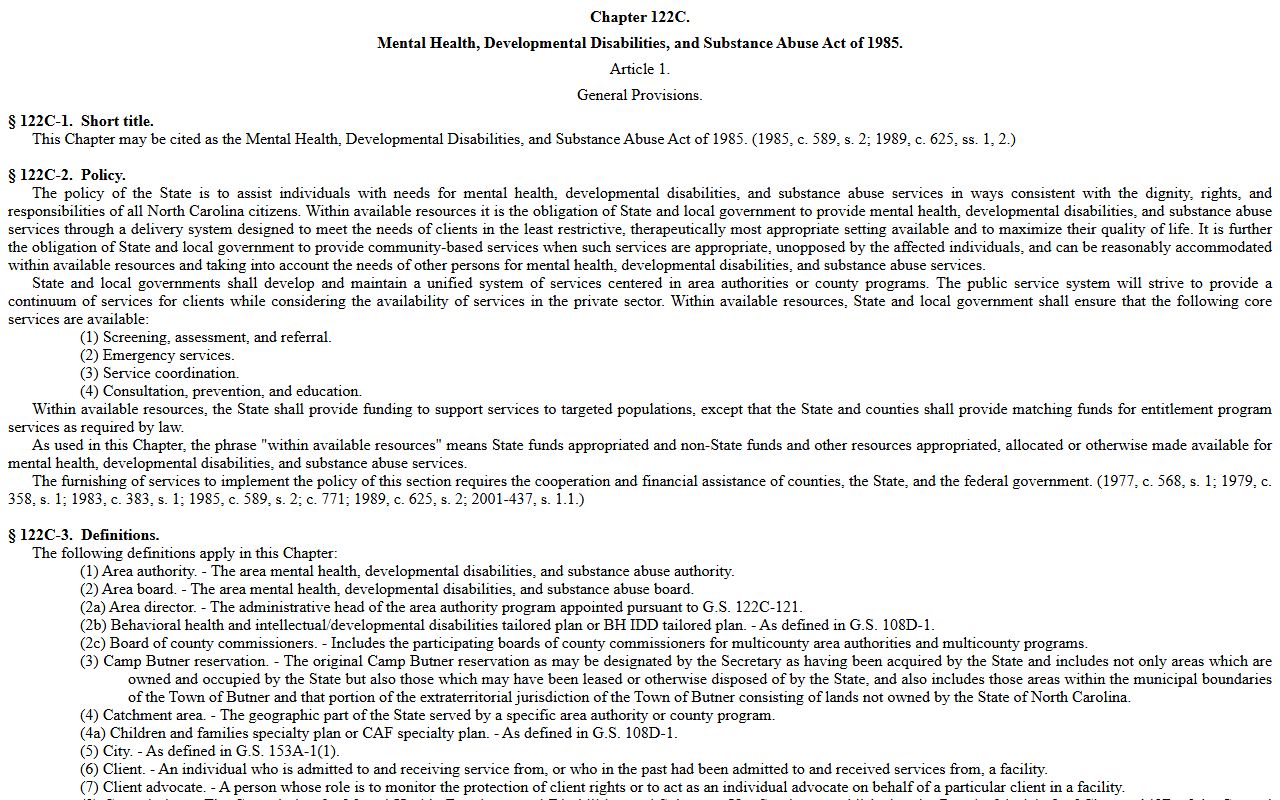
It explains why some guardianship and commitment details are kept out of the public file.