
Arrest Records in Forsyth County
Arrest records in Forsyth County are created by law enforcement. The Forsyth County Sheriff's Office, led by Sheriff Bobby F. Kimbrough, Jr., runs the county jail and keeps the public roster. City police, the State Highway Patrol, and other agencies also make arrests in the county. When officers book a person, the jail records the name, the charges, a booking date, and a mugshot. That booking entry is the arrest record. It shows what a person was held for, not whether they are guilty.
An arrest record is different from a criminal court record. The arrest is the first step. A court case begins only after charges are filed. The sheriff's roster shows custody. The Clerk of Superior Court holds the case file. A conviction is a separate outcome decided in court. For full case history and dispositions, use Forsyth County court records rather than the jail roster. The arrest record alone never proves a result.
Both records can be public. The roster updates fast. Court files move slower.
How to Search Forsyth County Arrest Records
The main public tool is the sheriff's Police-to-Citizen (P2C) inmate catalog. It lists people held at the Law Enforcement Detention Center, with names, charges, booking dates, and bond. The catalog is free and open to the public. For arrests that have moved into court, the statewide North Carolina eCourts Portal shows case history through Smart Search. The sheriff also posts a Daily Bulletin of activity that can give arrest context, though it is not a court record.
- Open the Forsyth Sheriff inmate catalog to see who is in custody now.
- Type a name in the free-text search field, or open Advanced to filter by race, gender, age, or arrest date.
- Click "See More Detail" on a result to expand the booking, charge, and bond data.
- For the court side of an arrest, search the case in eCourts by name or citation number.
A statewide criminal history search is a separate process. The Judicial Branch criminal law help topic explains how charges and records are handled across North Carolina. A view of that help page sets up what arrest data leads to, from the North Carolina criminal law help topic.
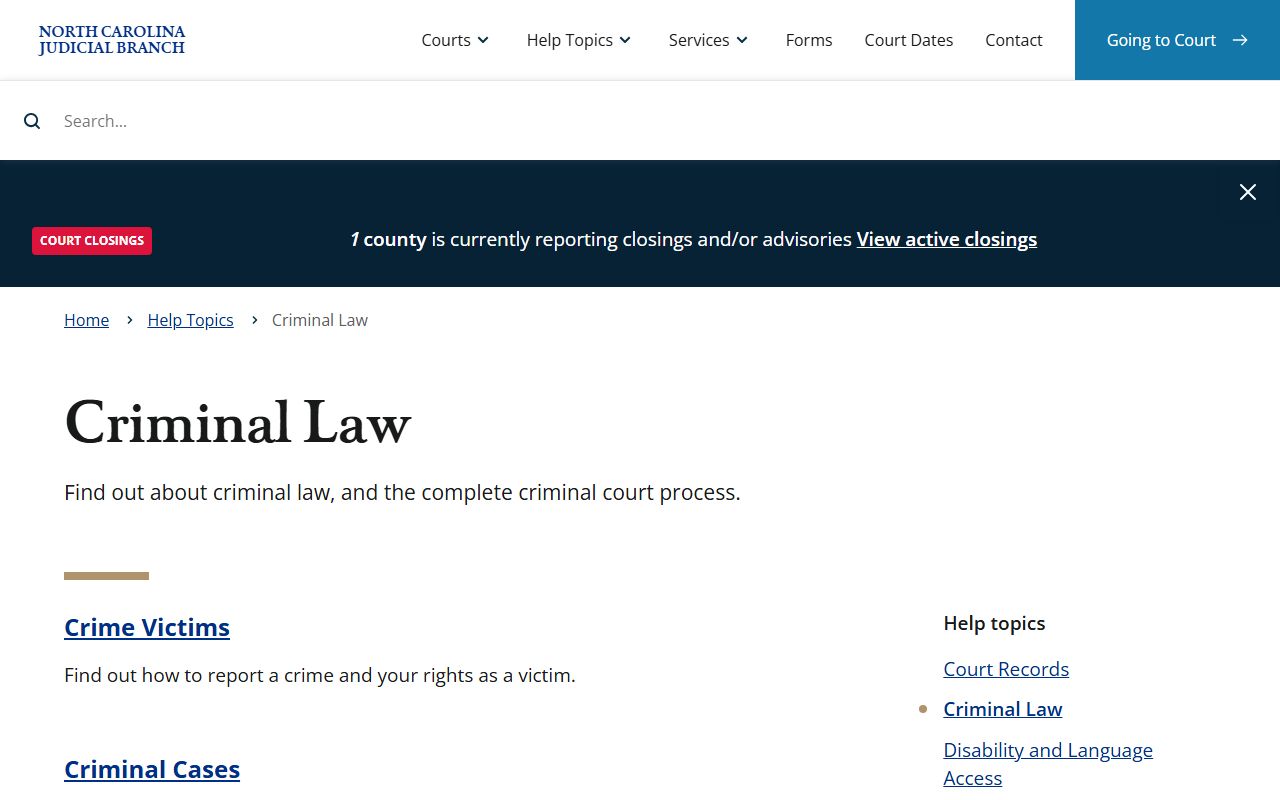
The help topic above is a good first stop before you decide between a jail roster check and a full court search.
Arrest Records vs. Criminal Court Records
An arrest record is made at booking. A criminal court record begins when the State files charges and a case opens. The two are linked, but they live in different offices. The sheriff keeps the booking data. The Clerk of Superior Court keeps the case file. A person can be arrested and later have charges dropped, so the arrest may exist while no conviction ever does. Reading both records together gives the full picture.
| Arrest Record | Criminal Court Record | |
|---|---|---|
| Source | Forsyth County Sheriff / police | Clerk of Superior Court |
| Created When | Booking at the jail | Charges filed in court |
| Contents | Name, charges, booking date, mugshot, bond | Pleadings, hearings, plea, disposition, sentence |
| Where to Search | Sheriff P2C inmate catalog | NC eCourts Portal |
Use the roster to confirm custody. Use the court file to confirm the result.
Charges vs. Convictions
Being charged is not the same as being convicted. A charge is an accusation. It rests on probable cause, which is a low legal bar. A conviction comes only after a guilty plea or a verdict, and it needs proof beyond a reasonable doubt. An arrest record may list serious charges that the court later reduces or dismisses. Treating a charge as proof of guilt is a common and costly mistake.
| Charge | Conviction | |
|---|---|---|
| Stage | Accusation at or after arrest | Verdict or plea in court |
| Burden of Proof | Probable cause | Beyond a reasonable doubt |
| Decided By | Magistrate or grand jury | Judge or jury |
| Public Record | Yes, unless sealed | Yes, unless expunged |
Note: A booking entry shown on a jail roster is not proof of guilt, and a charge can be dropped before any court date is ever set.
Sealed vs. Expunged Records
North Carolina lets some people clear a record. The two main ideas are sealing and expunction. A sealed record is closed to the public but may still exist for limited official use. An expunged record is sealed or destroyed and treated, for most purposes, as if it never happened. Expunction is a statutory process. A person must pick the right statute, file in the county of the charge, notify the required agencies, and get a court order.
| Sealed | Expunged | |
|---|---|---|
| Visibility | Hidden from public view | Destroyed or treated as never existing |
| Law Enforcement | Limited access remains | Very limited; AOC keeps a confidential file |
| Eligibility | Set by court order or statute | G.S. 15A-145, 15A-145.5, and 15A-146 |
Dismissed charges and not-guilty results follow G.S. 15A-146. Some first-offender cases use G.S. 15A-145, and certain older nonviolent convictions may qualify under G.S. 15A-145.5. A look at the dismissal expunction statute shows how that path is written, from the North Carolina first-offender expunction statute.
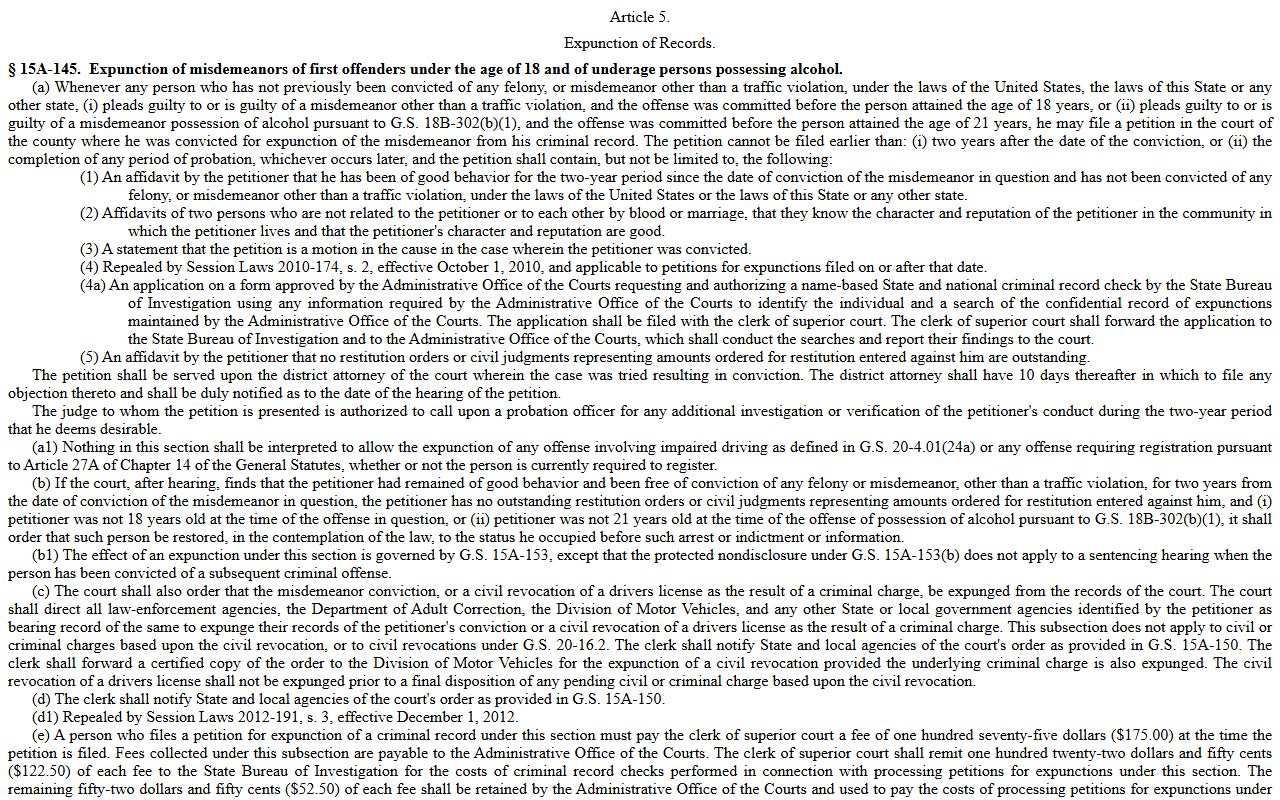
The statute text above is technical, so many people who want a Forsyth County record cleared talk to a lawyer first.
The dismissal statute is laid out in plain section form on the legislature site. A capture of that section shows the rule for charges that end without a conviction, from the North Carolina dismissed-charge expunction statute.
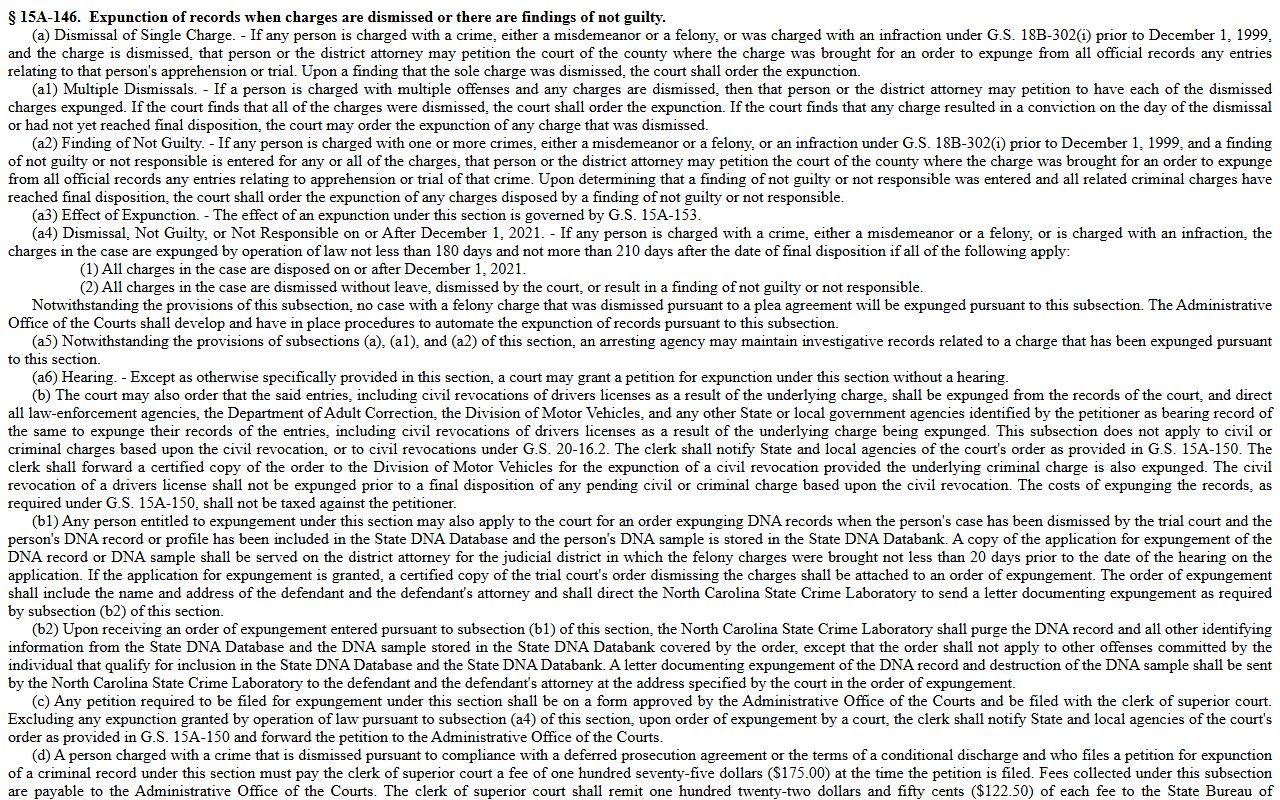
When an expunction is granted, the clerk sends the order to the listed agencies so the entries can be purged.
Mugshots and Booking Photos
A mugshot is the booking photo taken at jail intake. In Forsyth County, the sheriff's P2C inmate catalog is the official place where booking data is published. During an inspection of the public roster, the photo was not always visible in the collapsed result view, and details appear when a record is expanded. Mugshots tied to active custody can be public, but the sheriff controls what shows online and may not post a photo for every person held.
Third-party mugshot sites are not official. They often lift images and never update when a case is dismissed or a record is expunged. The safe source is the sheriff. For current custody photos and charges, start at the Forsyth Sheriff inmate catalog and confirm with the jail when timing matters.
Statewide Criminal Records Search
An arrest in Forsyth County may lead to a state-level criminal record. The North Carolina Department of Adult Correction (DAC) keeps an offender public search for people in state prison or under probation and parole. That is different from the county jail roster. The DAC search covers state custody, while the sheriff catalog covers local custody. Use the right tool for the question you have.
The state also keeps the North Carolina Sex Offender Registry through the NCSBI. The Clerk of Superior Court provides county criminal record searches under G.S. 7A-109, and certified results come from the clerk, not from any online roster. You can search state offenders through the NC DAC offender public information search or check the registry at the North Carolina Sex Offender Registry. Keep these systems separate; they are not one combined database.
Background Check Considerations
People use arrest records for many reasons. Some are casual lookups. Some feed formal background checks. A formal check for hiring, housing, or credit is regulated by the federal Fair Credit Reporting Act (FCRA), which sets strict rules on accuracy and use. A casual roster glance is not a regulated screening. The two are not interchangeable, and an arrest alone should never decide a serious matter.
For an official, certified criminal record, the Clerk of Superior Court is the source. Online rosters and portals are quick references, not legal proof. The District Attorney and the Public Defender each play a role once a case is filed. Learn more about the prosecutor and defense side under warrant records and county court resources.
Important: This site is private and is not a consumer reporting agency under the FCRA, so its information may not be used for employment, tenant, or credit screening.
Prosecution and Defense in Forsyth County
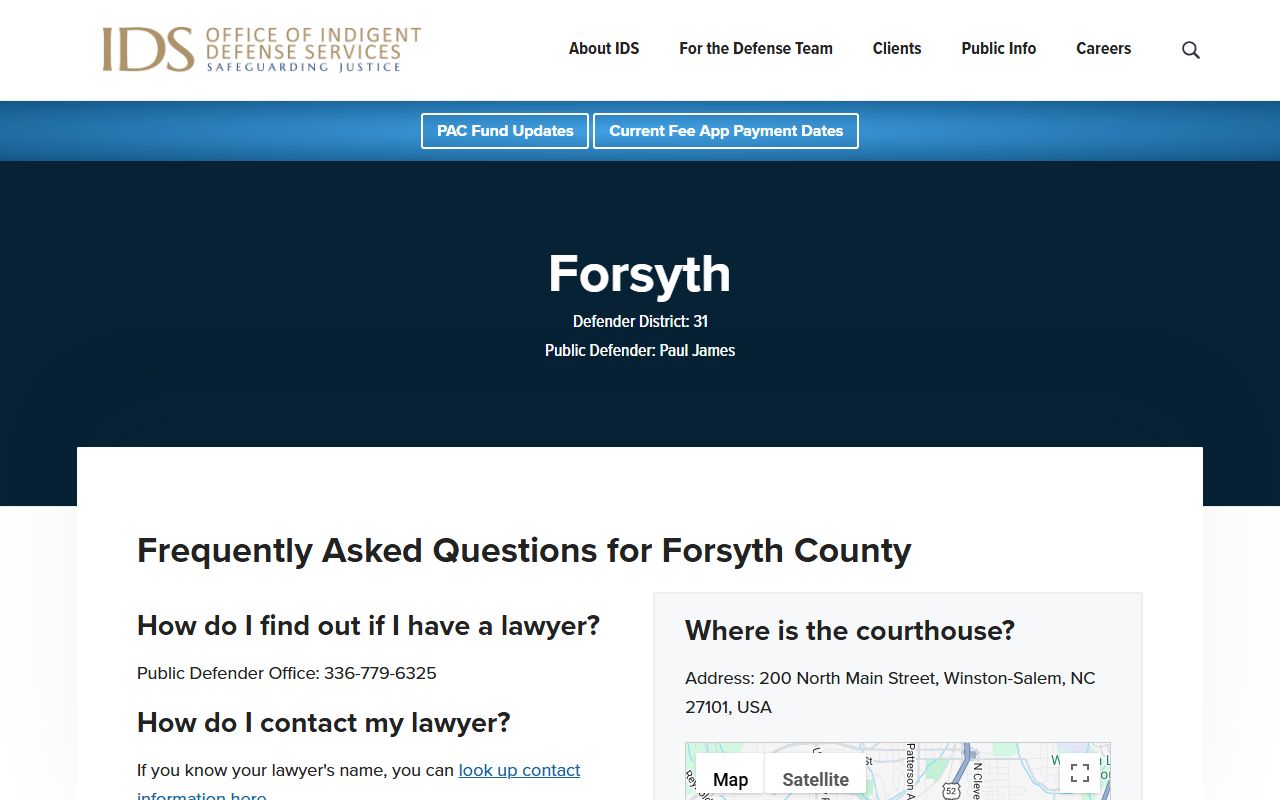
After an arrest, two offices shape the case. The District Attorney for Prosecutorial District 31 is Jim O'Neill. The DA prosecutes criminal cases filed in the county, represents the State, and prepares the criminal trial docket. People who cannot afford a lawyer may get a court-appointed attorney through Indigent Defense Services. The Forsyth Public Defender is Paul James, who leads Defender District 31.
A view of the District 31 prosecutor page shows the DA's role and contact details, from the Prosecutorial District 31 page.
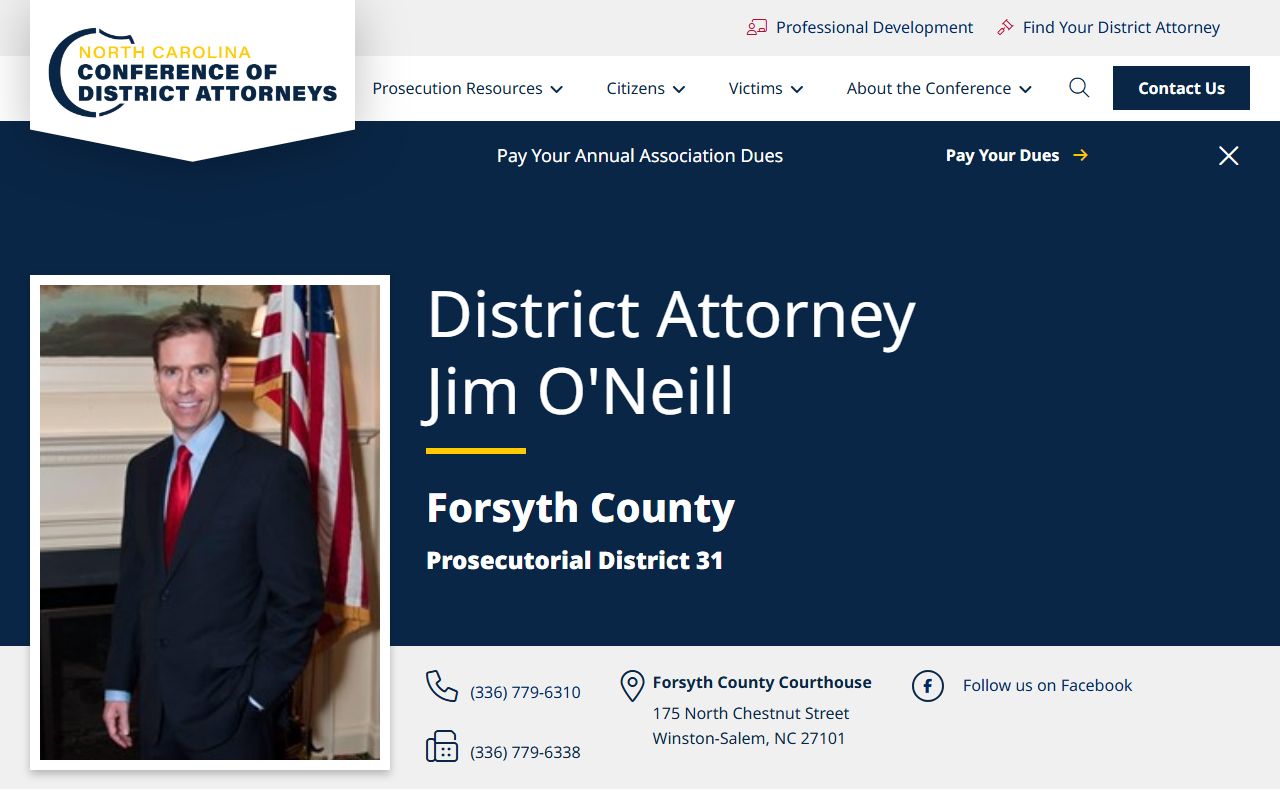
The prosecutor's office decides which charges move forward after an arrest is booked.
The public defender handles qualifying indigent defense, not general civil advice. A capture of the Forsyth indigent defense page lists the office and its lead defender, from the Forsyth Indigent Defense Services page.
If you face charges after an arrest, contacting counsel early is the safest move.
Restricted Criminal Records in Forsyth County
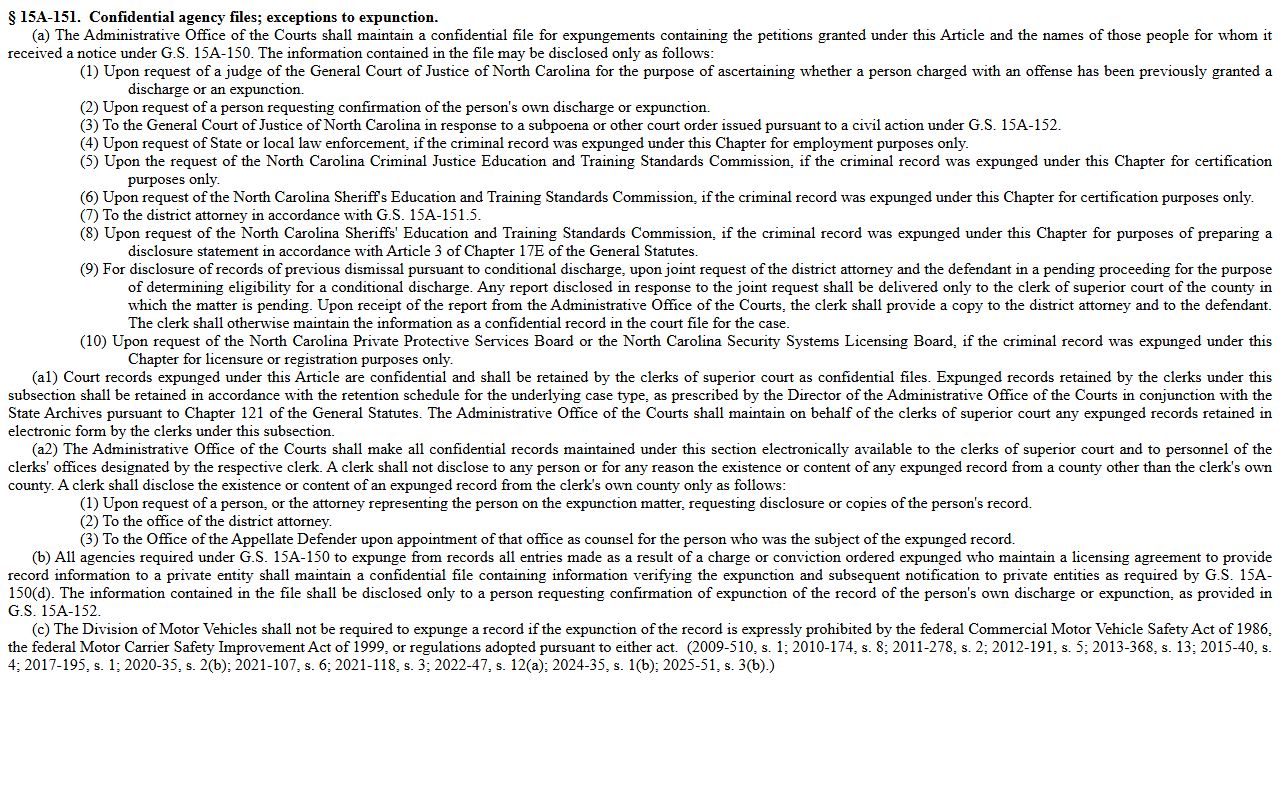
Not every arrest or criminal record is open. Juvenile records are withheld from public inspection under G.S. 7B-3000, and they do not become public when the juvenile turns 18. Expunged matters are sealed or destroyed, though the AOC keeps a confidential file under G.S. 15A-151 for narrow uses. Sealed warrants and active investigation files may also stay out of public view.
A capture of the confidential expunction-file statute shows how the AOC handles sealed records after an order, from the North Carolina confidential expunction statute.
Mental health treatment information is also protected under Chapter 122C and stays outside the public record.